
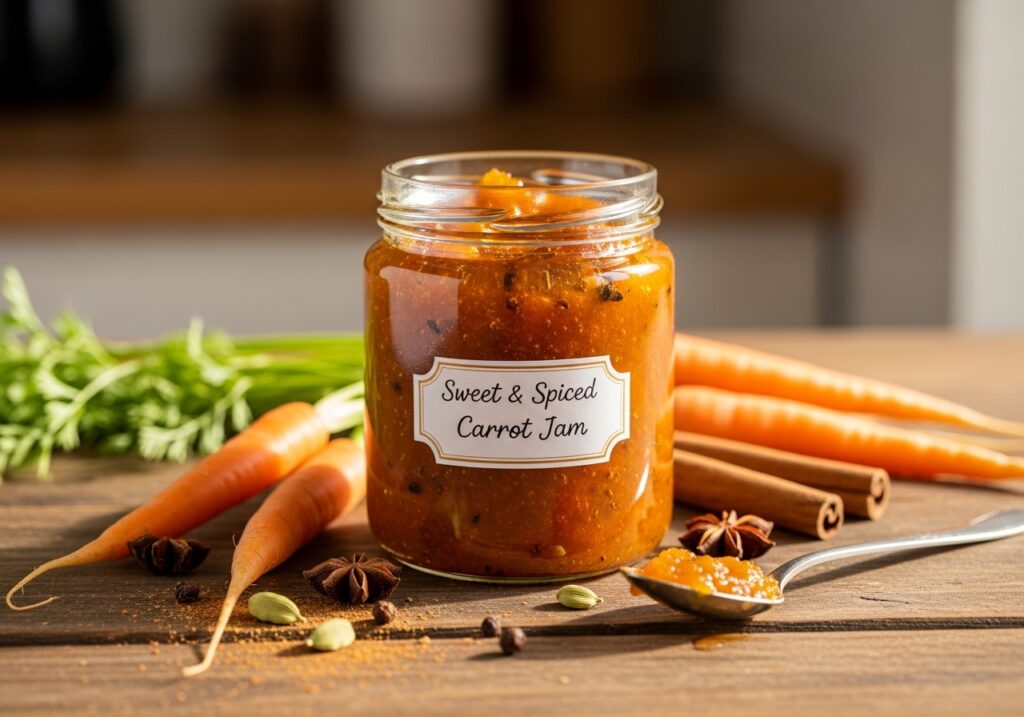
Carrot Jam is a delightfully unexpected preserve that transforms humble carrots into a sweet, aromatic spread with warm spices and citrus notes. This unique jam surprises with its beautiful golden-orange color and complex flavor profile that combines the natural sweetness of carrots with hints of ginger, cinnamon, and fresh lemon. Popular in European countries and gaining recognition worldwide, carrot jam offers a wonderful way to use an abundance of carrots while creating something truly special for your pantry. The carrots are gently cooked until tender, then simmered with sugar and spices until they reach a jam-like consistency that’s perfect for spreading on toast, filling pastries, or serving alongside cheese. This recipe yields approximately 2-3 cups of jam and creates a preserve that’s both nutritious and delicious, packed with beta-carotene and natural sweetness.
Essential Ingredients
- 2 pounds fresh carrots, peeled and chopped
- 2 cups granulated sugar
- 1/4 cup fresh lemon juice
- 2 tablespoons lemon zest
- 1 tablespoon fresh ginger, grated
- 1/2 teaspoon ground cinnamon
- 1/4 teaspoon ground nutmeg
- 1/4 teaspoon ground cardamom
- 1/4 teaspoon salt
- 1/2 cup water
- 1 teaspoon vanilla extract
- 2 tablespoons honey (optional)
Preparing the Carrots
Choose fresh, sweet carrots that are firm and brightly colored. Peel them thoroughly and cut into small, uniform pieces about 1/2 inch in size. Smaller pieces will cook more evenly and break down better during the cooking process. If your carrots are particularly large or woody, consider using only the sweeter top portions and saving the tougher ends for other uses.
Initial Cooking
Place the chopped carrots in a large, heavy-bottomed pot with the water. Bring to a boil over high heat, then reduce to medium and cook for 15-20 minutes until the carrots are very tender and can be easily pierced with a fork. The carrots should be soft enough to mash easily but not completely falling apart.
Mashing and Texturing
Once the carrots are tender, use a potato masher to break them down into smaller pieces. You can adjust the texture to your preference – some people prefer a chunky jam while others like it smoother. For a completely smooth jam, you can use an immersion blender to puree the carrots, but leave some texture for a more rustic appeal.
Adding Sugar and Spices
Add the sugar, lemon juice, lemon zest, grated ginger, cinnamon, nutmeg, cardamom, and salt to the mashed carrots. Stir well to combine all ingredients thoroughly. The sugar will help draw out more moisture from the carrots and begin the jellying process. Let the mixture sit for 5 minutes to allow the flavors to start melding together.
Beginning the Jam Process
Bring the mixture to a rolling boil over medium-high heat, stirring frequently to prevent sticking. Once boiling, reduce the heat to medium-low and continue cooking, stirring regularly. The jam will gradually thicken as the water evaporates and the natural sugars concentrate. This process typically takes 30-45 minutes.
Monitoring the Consistency
As the jam cooks, it will change from a watery mixture to a thick, glossy preserve. Stir frequently, especially toward the end of cooking, to prevent burning. The jam is ready when it coats the back of a spoon and drops off in a sheet rather than individual drops. You can also test by placing a small amount on a chilled plate – it should hold its shape when cooled.
Final Flavor Adjustments
During the last 5 minutes of cooking, add the vanilla extract and honey if using. The honey adds additional depth and helps balance any tartness from the lemon. Taste the jam and adjust the seasoning – you might want to add more lemon juice for brightness or more spices for warmth.
Testing for Doneness
The jam should have a rich, golden color and a consistency similar to apple butter. When you draw a spoon across the bottom of the pot, it should leave a clear path that fills in slowly. The jam will continue to thicken slightly as it cools, so don’t overcook it.
Sterilizing Equipment
While the jam finishes cooking, sterilize your jars and lids by boiling them in water for 10 minutes or running them through a hot dishwasher cycle. This step is essential for preventing spoilage and ensuring your jam stays fresh for months.
Jarring and Sealing
Pour the hot jam into sterilized jars, leaving 1/4 inch of headspace at the top. Wipe the jar rims clean with a damp cloth to ensure a proper seal, then apply the sterilized lids. For long-term storage, process the sealed jars in a boiling water bath for 10 minutes.
Cooling and Storage
Allow the jars to cool completely at room temperature. You’ll hear the lids “pop” as they seal. Properly sealed jars can be stored in a cool, dark place for up to one year. Once opened, refrigerate and use within three weeks.
Serving Suggestions
Carrot jam is delicious spread on toast, biscuits, or scones. It pairs beautifully with cream cheese on bagels or as a filling for thumbprint cookies. Try it as a glaze for roasted meats or as a unique addition to a cheese board. The jam also works wonderfully in baking – use it as a filling for tarts or swirl it into muffin batter.
Flavor Variations
For a more exotic version, add a pinch of ground ginger and cardamom. Orange zest can be substituted for lemon zest for a different citrus note. Some cooks like to add chopped walnuts or pecans during the last few minutes of cooking for added texture. A splash of rum or bourbon can add sophistication to the flavor profile.
Tips for Success
Choose the sweetest carrots available – baby carrots or young, tender carrots work particularly well. The jam should be cooked slowly to develop the best flavor and prevent burning. If your jam seems too thick, you can thin it slightly with a little water or lemon juice. Conversely, if it’s too thin, continue cooking until it reaches the desired consistency. The natural sweetness of carrots means you can often reduce the sugar slightly if you prefer a less sweet preserve.